Anna
Of Fates & Fables (The Complete Series)Anna is one of the central human friends in Romy Cartelli’s circle and one of the story’s clearest embodiments of care, practicality, and chosen independence. Her kindness is not passivity. She mediates arguments, protects frightened friends, builds a successful food business through her own labor, and finally insists that loyalty does not require her to enter a supernatural life she does not want. Her departure from Boston therefore becomes an act of self-definition rather than a rejection of the people she loves.
Identity and Background
Anna is marked by her warm blue eyes, long blonde hair, and unmistakably Tennessee manner. Her kindness is expressed through small gestures, including tucking her hair behind her ear and trying to prevent Romy and Talia from arguing in public. She dislikes open conflict and is described as too Southern to let her friends quarrel without attempting to restore peace. That instinct makes her an emotional stabilizer within the group, especially when Romy’s fear and Talia’s bluntness threaten to pull conversations toward confrontation.
Her gentleness does not mean that she lacks a firm voice. When Romy and Talia react suspiciously to Brody, Anna defends the qualities she believes she has seen in him, describing him as funny and capable of sweetness and asking her friends to give him a chance. Her defense later becomes painful in retrospect when she realizes that Brody’s apparent character concealed the truth about him. Anna’s arc thus includes the difficult movement from trusting personal impressions to recognizing that charm can coexist with danger.
Anna also has a friendship with Justice that predates the central supernatural crisis. Romy considers Justice the only Delta she regards as a friend and recalls that Anna’s group often encountered him at Delta Kappa mixer events. This places Anna within the ordinary social world of the university before the werewolf conflict transforms familiar relationships into matters of survival.
Work, Baking, and Care
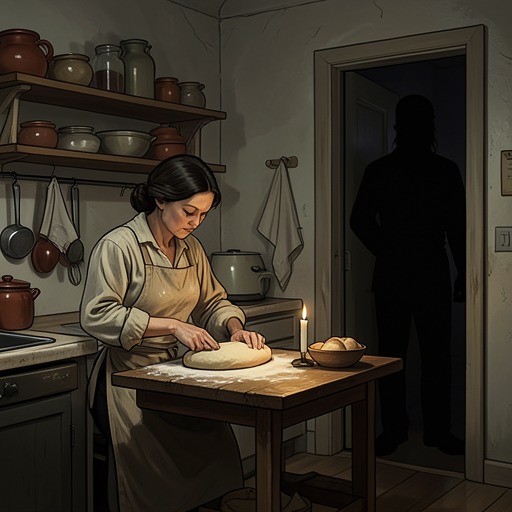
Anna’s dessert truck is among the most popular in Reverence, and her reputation rests on more than novelty. She is a master baker whose desserts have become a genuine attraction. The truck’s playful product names include Holy crepe, Well, I eclair, Bless your tart, and Butter my biscuit, but the humor of the branding is secondary to the quality of the food. Anna already owned a successful business when she met Romy and Talia as a freshman, and she attends college partly to learn how to expand that enterprise into a household name.
The business represents self-funded ambition and accumulated labor. Anna explains that she worked every summer from the age of sixteen to save for the truck, making its later destruction more than a lost vehicle. When the truck is damaged during the rescue operation, compliments cannot replace her favorite measuring cups or the business she built through years of work. Her anger is therefore economically precise: the crisis has endangered not only her safety but also the tools, savings, and professional identity that made her independent.
Food is also Anna’s principal language of affection. She brings leftover cupcakes home after a shift, offers food when the group is frightened, cooks a massive breakfast after the rescue, and later calls everyone into the kitchen to taste what she has prepared. She feeds Girlfriend bacon while cooking and responds to the tiny dog’s demands with laughter. These scenes give domestic care a material form. Anna does not merely reassure the group; she restores ordinary routines through food, shared plates, and the work of making enough for everyone.
Her food truck also becomes a practical resource during the escape from Brody’s operation. Talia drives Anna’s truck through the opening where the front door once stood, while Lynch hides among the equipment and the rescued girls are wedged between the fryer and refrigerator. The vehicle is at once livelihood, shelter, transport, and evidence of the cost of resistance. Anna’s comic identity as “Betty Crocker” survives the danger, but the damaged truck reveals the labor beneath the joke.
Friendship and Protective Loyalty
Anna’s relationship with Romy and Talia is built on long familiarity and mutual protection. She and Romy met as freshmen, when both already had successful enterprises, and their friendship grows inside a circle where teasing, food, argument, and emotional reassurance overlap. Anna’s peacekeeping manner contrasts with Talia’s intimidating appearance and tough New York attitude, yet the two remain closely allied. Talia may resist sentimental language, while Anna openly acknowledges the group’s emotional bonds and worries about its safety.
When Romy’s warnings about werewolves become frightening, Anna tells her that she and Talia remain protective even after all this time. The statement shows that Anna treats Romy’s fear as a reason for care rather than ridicule, even while the wider public later turns the Girl Who Cried Werewolf label into a source of mockery and online hostility. Anna’s support is personal and embodied: she stays close, offers food, speaks up when Romy is accused, and helps maintain a social space in which Romy can still be believed.
Anna also understands the practical danger created by the supernatural threat. She admits that she wants to stop worrying about walking alone to class, a simple request that exposes how thoroughly violence has invaded university life. Later, when Romy and Talia need transportation to retrieve Anna, the urgency of the plan makes clear that Anna is not a peripheral civilian. Her safety is one of the reasons the rescue network acts.
During the aftermath of Romy’s captivity, Anna’s emotional response becomes quieter. She stands apart from the others near a window, and Romy notices the distance before pulling her into a hug. Anna’s isolation suggests the strain of witnessing events that exceed ordinary friendship, while her tears and questions show that she has not withdrawn from the group emotionally. When she asks whether Brody truly caused the abduction, her fear is joined to a need for confirmation, testimony, and shared reality.
The Supernatural Crisis and Its Boundaries
Anna’s connection to the supernatural world is mediated through friendship rather than desire for transformation. She learns that magic is real and reacts with astonishment, challenging the secrecy surrounding spells and supernatural knowledge. Yet learning the truth does not make her eager to become part of it. Her position remains distinct from Romy’s decision to choose werewolf transformation and from Talia’s eventual transformation and mastery of werewolf form.
Her refusal becomes explicit when she says she cannot go with the others. Anna explains that she is happy for Romy and Kash Montgomery, wants to attend their wedding, and hopes to see them have children, but the supernatural life is not hers. She has always regarded Boston as temporary and identifies Tennessee as the place where her parents are waiting and where she intends to build her business empire. Her request is carefully framed around normal life: she wants to know whether she can remain aware of the group’s secret while still living outside its dangers.
This choice gives Anna unusual moral and narrative clarity. The group’s cause is just, and Brody’s threat demands resistance, but Anna does not interpret justice as a command that everyone must share the same risks. Her boundary separates solidarity from absorption. She can help rescue the captive girls, feed the exhausted survivors, defend her friends, and remain informed without accepting transformation, pack membership, or permanent participation in the war.
Her decision also revises the meaning of the group’s chosen family. A chosen family can protect a member without claiming ownership of that member’s future. Anna’s friends want her near them, but her wish to return home is treated as a legitimate need rather than betrayal. The supernatural plot therefore produces not only new bonds but also a test of whether those bonds can tolerate difference.
Change, Future, and Narrative Role
Anna changes most visibly in what she is willing to recognize. At first she trusts Brody enough to defend him and asks her friends to look past their suspicion. After his crimes become undeniable, she admits that she cannot believe they failed to see the truth. The shift is painful because it implicates her own judgment, but it also demonstrates that her loyalty is not blind once evidence overturns it.
She also refuses to let trauma erase her professional future. After Nick and Conner’s actions disrupt Danielle’s education and medical ambitions, Anna celebrates the possibility that supernatural medicine may offer Danielle another path. Anna’s response reflects her broader instinct: damage can change a life, but it should not be allowed to define the life completely. Her own return to Tennessee follows the same principle. She will carry knowledge of the supernatural world, but she will not let it replace the future she had already planned.
By the later stages, Anna remains a source of nourishment, humor, and practical competence. She cooks for the group, protects the ordinary rhythm of communal life, and contributes her resources even after the loss of her truck. At the same time, she prepares to leave Boston for Tennessee, where her parents and entrepreneurial ambitions await. Her ending is not a transformation into a werewolf or a final battle with Brody. It is a conscious return to the life she chooses.
Anna’s narrative importance lies in this contrast. Romy, Talia, and their allies answer supernatural violence by entering deeper into the hidden world; Anna answers it by preserving a human future beyond that world. Her baking, Southern warmth, protective speech, and refusal to be absorbed turn domestic labor and personal choice into forms of resistance. She proves that courage can mean joining the fight, but it can also mean deciding what kind of life the fight is meant to protect.